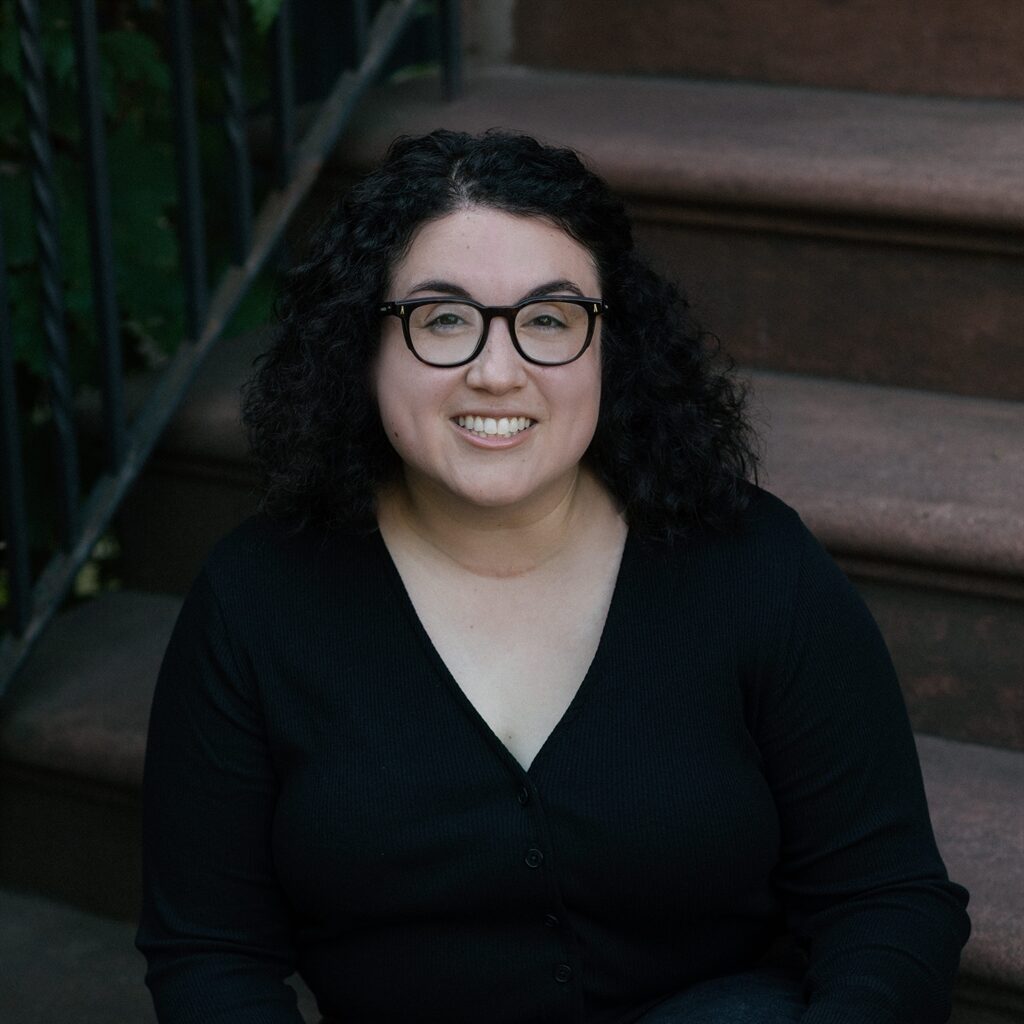
Editorial Note: Stephanie Cohen Xu was a finalist for our Editors-in-Chief position for our 2026 Community Anthologies. We invited our finalists to write a short piece on the topic of their proposed anthology. Below, get insight into “On Metamorphosis,” the anthology topic that Stephanie had proposed for their Community Anthology.
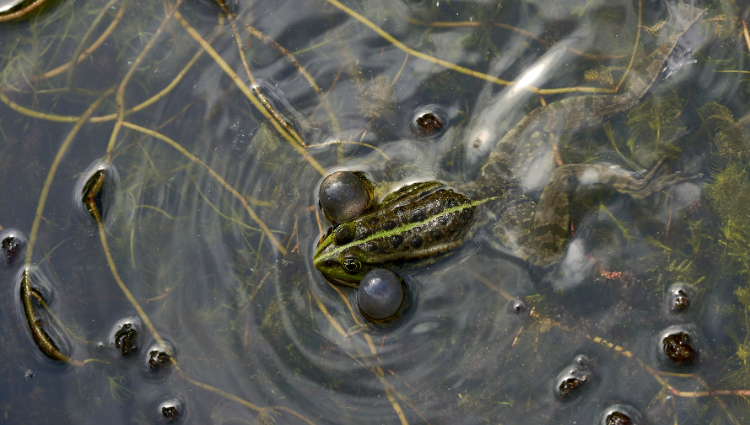
It’s a bright New York summer day at the Botanical Garden in the Bronx, and my spouse and I have stopped to look at a pond in a courtyard that most of the visitors seem to walk past without noticing. We come here quite often to escape the city, and so at this point, our favorite thing is noticing hidden gems or nooks in the garden we’ve never explored before. The visitors are focused today on the usual highlights of the Garden — the peonies are nearing the end of their blooms, the roses beginning to show their faces from behind their velvety petals, and there are plenty of black squirrels confidently asking for human food. As we gaze into the shaded pond, we are charmed to see a school of fluorescent orange and snow-white goldfish swim by. But below the lotus flowers and lily pads, we also see some unexpected shadowy figures, with unique shapes, contorting in the water. There’s no placard defining which creature this is —maybe because the Garden thinks it won’t be exciting to tourists, or maybe because the concept seems too “commonplace” — or maybe, I think, because no one’s really noticed they’re there. As my spouse asks what these awkward, clumsy, and curious creatures are, I instantly recognize them when I see them: a pollywog, or the adolescent stages of a frog.
The pollywog can tell you: change is inevitable. No matter how much we run from it, it will still find us. And so I find myself drawn to the same questions time and time again, especially in context of a world surrounding us that we cannot control — does change always have to be a negative concept? And is change ever complete, or is it a lifelong journey of discovery?
The pollywogs at the Garden reminded me of concepts that feel so pertinent to existing as queer, trans, and BIPOC people right now — metamorphosis: or change, rebirth, and transformation. Metamorphosis can often be a way of survival for marginalized folks, especially in professional or creative spaces. We rely on code-switching or changing our aesthetics to make ourselves more “appealing” or “marketable” to spaces that do not include or celebrate us, even if they take inspiration or imagery from our cultures, languages, or homelands and claim it as their own. To be successful, many of us find ourselves changing (or considering changing) our art, our dialects, our dress, or how we refer to ourselves to not “inconvenience” others. Metamorphosis as a zoological term often calls to mind a creature changing into their most mature, most refined state — but we forget that even the zoological progress includes many animals that encompass a wide spectrum, from incomplete to complete change. As my plan for the 2026 Communities Anthologies application, I envisioned collecting other community members’ perspectives on this theme in a comprehensive volume to reaffirm not only that metamorphosis is a nonlinear adventure for many BIPOC/LGBTQIA+ folks, but it can also look like so many different things.
In science class as kids, many of us were taught to focus on the “successful” moment when the caterpillar breaks open from its chrysalis and seemingly magically becomes a butterfly, soon to fly away and be forgotten for its heartbreakingly short lifespan; we rarely focused on all of the healing and self-work that brought the creature to that point of change. And there was no love for the frogs, really — frogs that, in the folklore of my family’s home country in South America, symbolize luck, vitality, and renewal. We dissect frogs, rather than delving into their fascinating life cycles and changes, and what we can learn about our own human experience from them. Many of us remember the painful memories of picking apart a formaldehyde-doused frog in high school biology. Rather than focus solely on the trauma of being a frog, or of living on the margins, I wanted to have a call for pieces that celebrate the queer, trans, and BIPOC process of joy and survival. While these concepts often go hand-in-hand, I wanted to capture and celebrate community members’ resilience, self-acceptance, healing, revival, and rebirth in their journey to become their truest selves. Metamorphosis as a change, towards one’s genuine self and self-love.
Change can be dismissed or feared as disruption, as monstrous, as unwanted. But maybe it can also present us with opportunity. As poet Walt Whitman wrote in his piece “Song of Myself”1: “I contain multitudes.” How many wonderful versions of ourselves could we nourish and nurture, if we let change in? Many species of butterflies spend one to two weeks locked within their chrysalis, only to spend the same amount of brief time outside with their new wings before their lives expire2. But the frogs march onwards — the Green Frog3, North American Bullfrog4, and Coastal Tailed Frog5, all spend long periods undergoing change, and can live healthy varying lifespans upwards of 5, 10, and 15 years respectively in the wild.
As I grow older, I’ve realized that I spent many of my formative years emotionally floating in the ether, trying to figure out what I could possibly do in my metaphorical chrysalis to emerge as someone who would be considered enough by a world that does not always celebrate nonconformity. Perhaps we can accept that our versions of metamorphosis don’t have to be as linear as a gorgeous insect’s are, and that this journey is easier if we support each other to keep our heads above the murky pond water. I hope one day that such an issue On Metamorphosis will speak to readers, writers, and artists celebrating change, the fascinating people they are, and who they might become.
As my spouse and I stood over the pond, watching the pollywogs gleefully accustom themselves to their ever-shifting bodies, I was reminded of the first time I ever saw pollywogs. I grew up outside of the Florida Everglades, 1.5 million acres of wetlands and swamps and bogs that are home to countless otherworldly creatures like this. Our town was within a few miles of the Everglades border itself, but countless animals would make their way into the suburbs, as that land had originally been their home to begin with. As kids, my best friend and I absolutely loved sitting by the lake, watching the pollywogs swim into the shoals, and picking them up in a bucketful of water to observe them closely — to return to the water, of course, as soon as possible. It was a pastime that never grew old, one that the adults around us didn’t really understand or keep track of — and one my friend and I remember fondly nearly three decades later. I think back to how unsure I was of myself in my own skin in those years, and how growing up has been an imperfect, sometimes uncomfortable series of lessons and changes much like the life cycle of a frog. And now as I stretch out my webbed hands, flex my gills, and extend my long legs to bound upward, I wonder if change really needs to end, or if continuing to grow can be a process that brings us catharsis, acceptance, and joy.
That day in the Garden, I tell my spouse, “We’ll have to come back soon. We have to see where life takes them. I want to see who they might become someday.”
1 https://www.poetryfoundation.org/poems/45477/song-of-myself-1892-version
2 An exception, the Mourning Cloak butterfly, can live up to 10 to 12 months, and hibernates through the winter. https://mdc.mo.gov/discover-nature/field-guide/mourning-cloak
3 The Green Frog’s metamorphosis cycle can last up to about 2 years. https://www.chesapeakebay.net/discover/field-guide/entry/green-frog
4 The North American Bullfrog can spend from 1 to 3 years in metamorphosis. https://www.chesapeakebay.net/discover/field-guide/entry/american-bullfrog
5 The Coastal Tailed Frog has one of the longest-known metamorphosis cycles, lasting from 1 to 4 years. https://wdfw.wa.gov/species-habitats/species/ascaphus-truei