Editorial Note: Rachel Mikita and Terry Nguyen were finalists for our Editors-in-Chief position for our 2026 Community Anthologies. We invited our finalists to write a short piece on the topic of their proposed anthology. Below, get insight into “On Witnessing,” the anthology topic that Rachel and Terry had proposed for their Community Anthology.
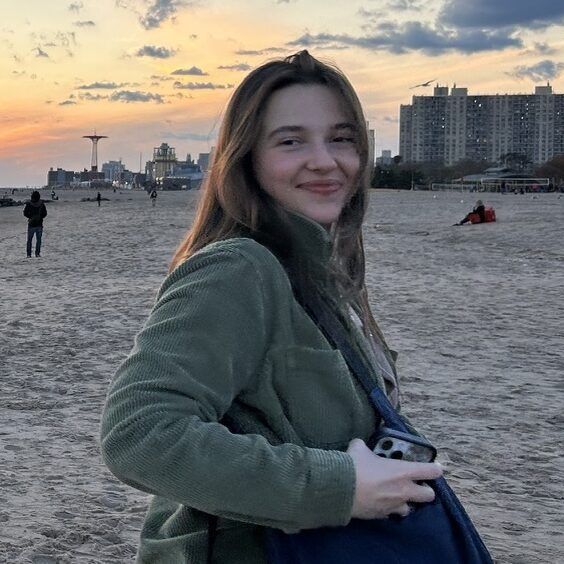
Rachel Mikita
I spent my formative childhood years in the foothills of the Appalachian mountains in a small village called Blacklick, PA, a small coal mining hamlet in western Pennsylvania. My family was a part of the tight knit Carpatho-Rusyn community, where we walked to church, gleaned cabbages from local farms for sauerkraut, and where celebrations were scored by never ending polka music. It was also in this community where I first witnessed the devastating ecological and social impacts of heavy industry. Abandoned factories and tipples lurked in the woods like overgrown rusted giants, strip mines left the hilltops surrounding my home barren and bald, the Homer City Power Plant dominated our skyline, pouring steam out into the sky, and the Blacklick Creek ran bright orange due to heavy chemical run-off from the mines.
When my father and I hiked along the creek, he would encourage me to pay attention to the water, and notice what animals and plants were present. He told me that when amphibians returned to the creek, then we would know that the water was healthy again. He taught me how to not just notice the industrial devastation, but also the healing that begins in small ways, such as a frog making a home on the water’s edge.
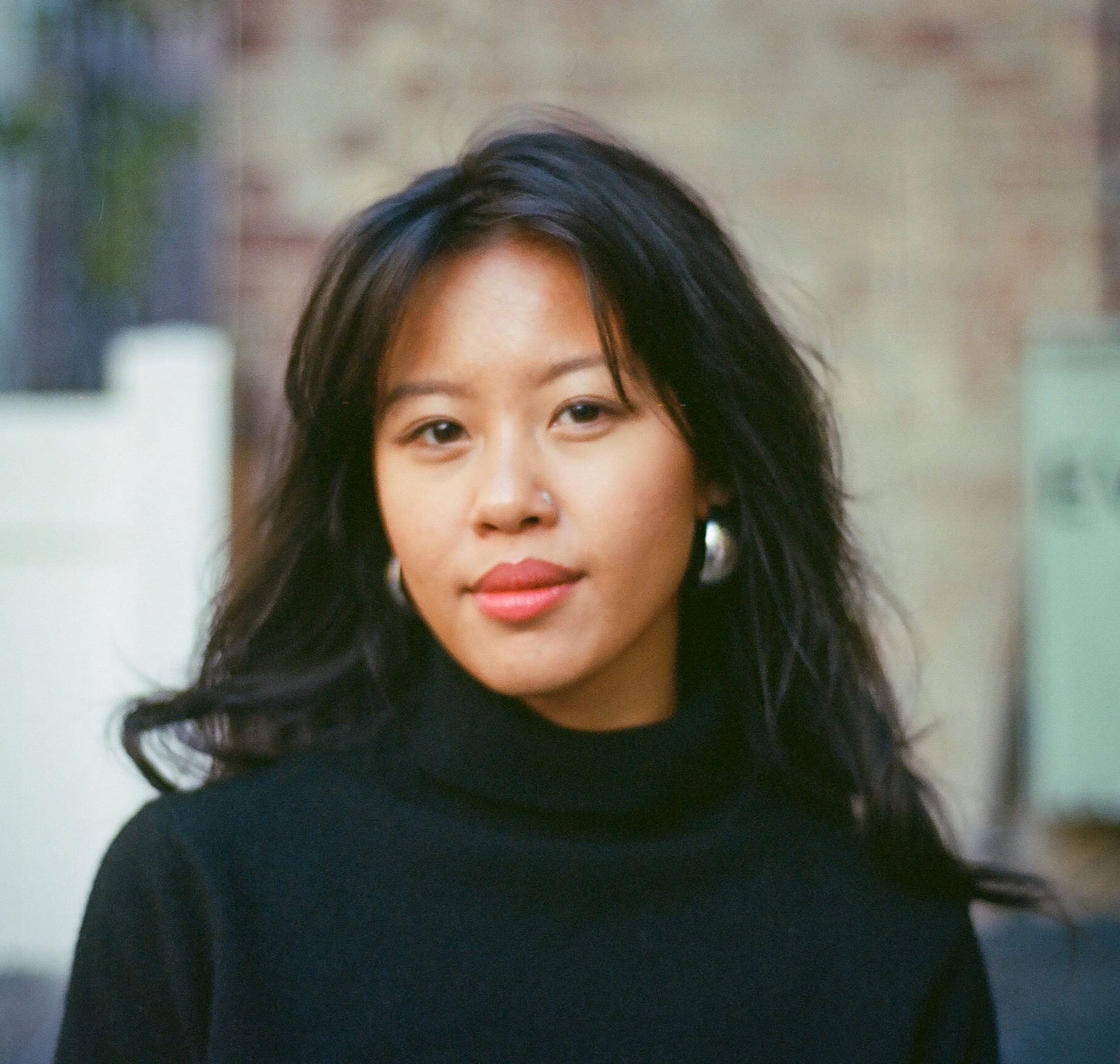
Terry Nguyen
When I think of Orange County, the southern California suburb I grew up in, the primary image that comes to mind is its snaking freeways, the seemingly endless expanse of asphalt that is the I-5 or the I-405. As a child, the roads felt prehistoric in their immensity, as if they had existed during the time of the dinosaurs. It was only when I began driving that the landscape took on an ahistoric quality; the feeling of being removed from time was exacerbated by California’s seasonal stasis.
I like to joke that I grew up in a simulation: Our house was within a two-mile radius of Disneyland, a theme park modeled after American utopianic ideals. My family spent our weekends dining out, socializing, and shopping in Little Saigon, a Westernized time-capsule of pre-1975 Saigon that is home to the largest Vietnamese diasporic population in the world. My writing, as a result, seeks to investigate the sense of placelessness (or irreality, per Baudrillard) that permeates my early life.
Although we are poets with backgrounds in nonfiction writing, we are invested in ways that language can transcend self-expression: How can poetry reckon with and reframe how we perceive — and thus inhabit — the world? In a conflict resolution masterclass taught by the poet Pádraig ó Tuama at Columbia last fall, we began discussing the reparative possibilities of language, and how it works in and through people and communities.
So we embarked on an investigation of sorts, reading a variety of philosophical and critical texts. We received many valuable recommendations, particularly from our teacher, the poet Deborah Paredez, whose own book of documentary poetry, The Year of the Dog, came to be a source of inspiration for us. Other books that guided our search are Muriel Rukeyser’s testimonial-driven Book of the Dead, a poetic document on the mining disaster at Gauley Bridge, WV; W.G. Sebald’s The Rings of Saturn, a novelistic travelogue that ruminates on the “traces of destruction” the wandering narrator encounters; and Etel Adnan’s “To Be In A Time of War,” a long poem detailing the repetitious actions of modern life.
We discussed our ideas and questions endlessly over coffees, lunches, on class breaks, and via ten minute-long voice notes between commutes. We became particularly concerned with what keeps us from bearing true witness: How should artists navigate the inherent voyeurism of our age, when everything is photographed, recorded, and shared online? We are constantly subject to a deluge of images, exposing us to catastrophes of all scales — from the political and ecological to the interpersonal, and algorithms that bend and shape our perspectives, only showing us what we want to see. In this state of oversaturation, our attention becomes a scarce resource, leaving us at risk of becoming numb or disconnected. How might we bear witness to a world in constant crisis? Who is authorized to speak on what they’ve seen — and how is that authority constructed, distributed, or challenged? How might it lead us to confront, in Philip Metres’s words, our “positions of privileges as text-workers, as makers in the language of contemporary empire”?
And how, then, can writing create space for witnessing — one where we are not passive observers, but active participants in the pursuit of truly seeing the world?
Writing teaches us to pay attention, becoming a material home for both archives of destruction and the telling presence of frogs. When we strive to balance our personal felt truth with the details of the world that surrounds us, we can create projects that are inhabited by a plurality of perspectives and voices, similar to a community. It is possible for writing to not simply be a representation of an experience or an event, but to embody it through language and image. In this way, writing can move beyond simply “telling,” and become a means “of working out new forms of livable relations,” to quote the poet Kimberly Alidio. When we consult existing materials, whether historical or personal (such as oral histories, maps, medical records, and legal documents), we broaden our individual perspectives, putting both the past and the present in sight and allowing us to create work that situates itself in conversation with those around us. Witnessing, like writing, is a way of moving through the world, one that requires us to pay attention, and move ourselves aside to make room for the other.