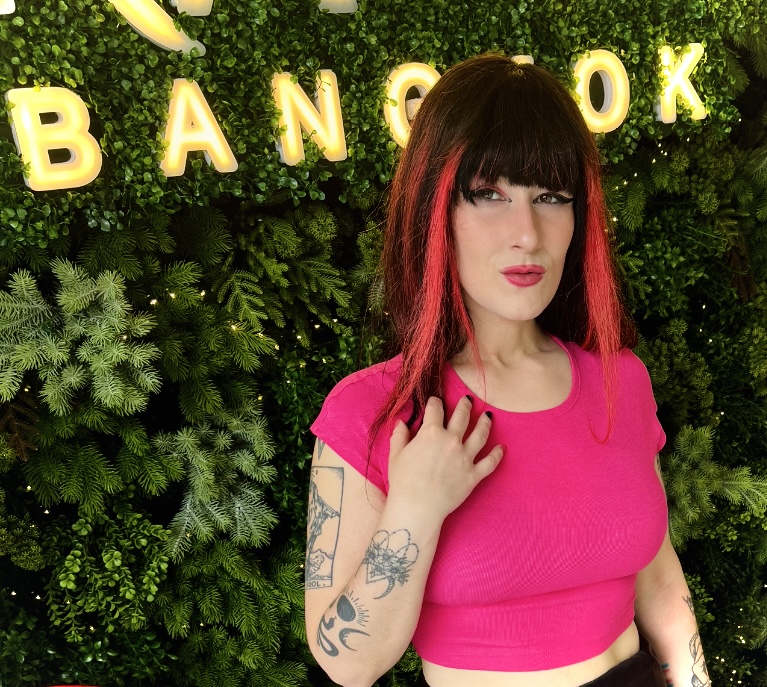

Editorial Note: Jie Cohen was a finalist for our Editors-in-Chief position for our 2026 Community Anthologies. We invited our finalists to write a short piece on the topic of their proposed anthology. Below, get insight into “On Independence,” the anthology topic that Jie had proposed for their Community Anthology.
In the quiet and anxious days before AP exams, about two months ago, one of my students whispered:
“I wonder what Turkmenistan would have been like without the influence of the Soviet Union. Based on Magtymguly Pyragy’s work, I bet it would have been even more beautiful…”
When countries are corseted together as a conglomerate and squeezed for their resources, what’s left is usually suffering of some kind. My family was exiled from Ukraine in ongoing conflict, my Turkmen students had family starve and die, my Georgian friends are still seeing Empire break through their borders today.
But borders are bad, right? As globalists, how do we contend with the fact that breaking a vast agreement into smaller pieces is a step back in globalization? We contend with that question through art.
Soviet — especially Central Asian and Caucuses — art is underappreciated. Much of what was produced during this time was destroyed, but in the cracks, words survive. Likewise, I feel that pre-Soviet art is almost folklore, unknown to those outside of it. There has been a lack of access for those who do not speak these languages, as most of this art existed firmly in the realm of oral storytelling, and during the Soviet regime, languages were being purposefully eliminated. It is an insidious way to hide stories, cultures and bonds — suppress language, cauterize tradition.
Thus, this article is not for me. It is not even truly for independence. It is for the beauty of the forgotten before destruction and for the beauty of creation during rebirth. Here are voices from Phoenix throats celebrating speaking again after being burned.
Smile Summerisle is a seventeen year old Turkmen poet, and he recites this anthem of independence-through-unity in his translation of the poem “Döker Bolduk Ýaşymyz” by Magtymguly Pyragy, exerpted from the 18th century:
May our state rise, glorious, bright,
We pray and shed youth’s fleeting flight.
Grant my wish, O Allah, right,
Our red-capped one has gone in might.
May Khizr (Hyzyr) roam deserts, nations take flight,
May our homeland’s walls stand firm and tight.
All vineyards blood, our hearts delight,
On one tray, our meals unite
If Turkmens unite, their bond ignites,
Gulzum dries not, Nile flows in sight,
Teke, Yomut, Goklen, Yazyr, Alili unite,
Serving one state, five hearts in might.
Magtymguly said, let faith not slight,
Keep Muslims safe from infidel spite.
Yomut and Goklen join in fight,
Kemal Khan reigns, our guiding light.
Most post-Soviet countries had been conquered at multiple periods. This poem is in response to that, Magtmguly Pyragy being one of the most well-renowned and mythologized figures in Turkmen history.
When I asked Nickolay Shlapachenko, International Relations undergraduate, about how he engages with his Ukrainian heritage while knowing that he may never get to return, he said:
“Growing up with Ukrainian roots has shown me the devastation of war, where it’s deeply hurtful to see what the invasion has done to my country. Equally painful, however, is the attempt to diminish and erase Ukraine’s culture and history.”
What stood out to me about this statement is not the facts — those valid feelings are present in anyone who has an ethnicity bathed in fracture — but that the same statement was made to me as a child by my great, great uncle, the only survivor in my family from his village in Sudylkiv, which was effectively ruined 107 years ago.
Sona Avagyan, sixteen-year-old Armenian writer, said regarding the destruction of art in the name of assimilation:
“Armenian art had to be called illegal if it did not benefit the Soviet empire. Writers were forced to write pieces either glorifying the empire or were banned from publishing, branded as an enemy to the nation. Artists with bright imaginations were forced to dim the colours on their canvas because no Soviet leader liked an overly cheerful painting.
Armenians were forced to share their artistic minds through underground networks which operated as a family to protect and acknowledge each other in a desperate effort to preserve the joy of culture.”
How do we deter the repetition of empire? We create new art using the remnants of old bricks. Ash Gabrielle, in her manuscript Queens of the Ancient City, writes on food:
“The fire was roaring, the fellow with the two-stringed instrument Zizi called a dutar was finally playing. They had been feasting for nearly two hours, since before the sun set, eating a meal of pilaf with raisins and another dried fruit Julia did not recognize, a small tart berry; mutton, camel sausages; slices of meat pie that had been cooked in embers in the sand; and some kind of alcoholic beverage made from milk.”
Cuisine carries culture, and writing about the Central Asian food that was at one time being eliminated from written recipe and personal communication is a deliberate act of keeping history alive. As Nickolay stated to me in an earlier conversation, one thing that he misses the most is his grandmother’s traditional Ukrainian Varenyky, and he hopes he will one day taste it again.
Smile Summerisle is focused on translating Turkmen poetry, and sharing Central Asian words with a world waiting to appreciate it. He hopes to attend an undergraduate program to craft a thesis on Turkmen and Turkish poetry translation. Sona studies language, is fluent in nine languages and counting, and hopes to similarly share words rooted in Armenian, practicing the art of translating between not only different languages, but different language families entirely to retain meaning.
Young people celebrate what is theirs.
And for myself? I collect young voices and step back.
While breaking from any empire is something to cheer, we must still remain committed to our goal of unity and global cooperation. But violently obtaining countries and states under an imperial project is not in the spirit of this goal, and for this, we can celebrate independence and self-autonomy just as we celebrate that among ourselves as individuals. We make. We talk. We write. We listen. We belong to ourselves and to each other on our own terms.
Featuring writing and statements from Smile Summerisle, Nickolay Shlapachenko, Sona Avagyan, and Ash Gabrielle, representing Turkmenistan, Ukraine, Armenia, and the unified Silk Road respectively.