When to Eat a Persimmon
If it’s not ripe, it will stick to your tongue
and the roof of your mouth like cotton balls
and sand. Hold it in your palm. Thumb
until you almost make a dent. If
there’s a moment of resistance before the give,
venture a slice. Or you could wait
until the orb softens from sunrise
to khaki. Let the sticky scent before decay
take you back to the breath you took after
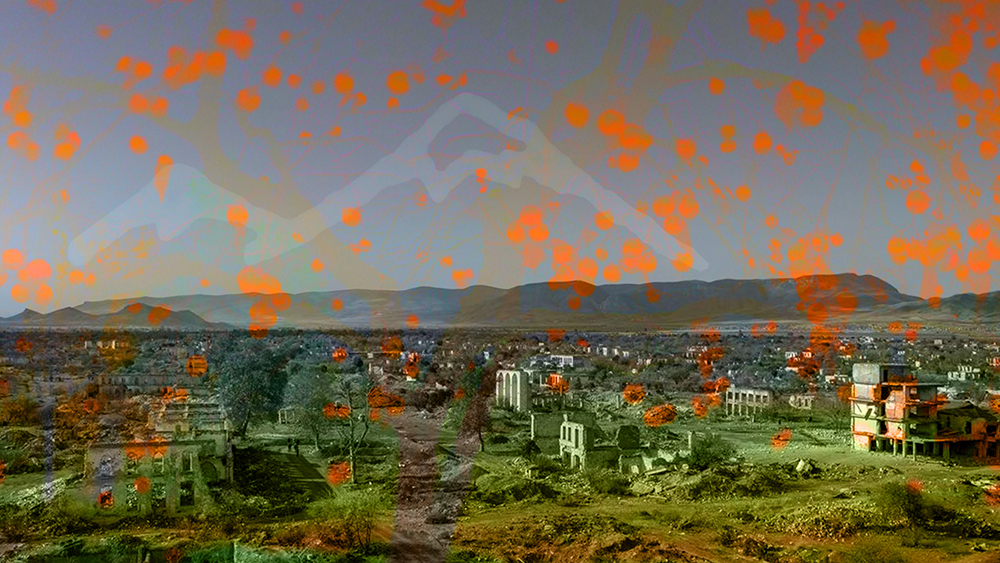
the war. Earth pocked by shrapnel
and fallen fruit. Heavy trees, intent
on still giving. Farmer’s hand extended: Take this.
Take what is offered. Grip it to your chest. Wait
until it’s almost too far gone.
Catching up after Pashinyan announces the removal of Ararat from Armenia’s entry stamp
“What he’s telling us to do is to stop
dreaming.” This part of the conversation
has been put off until after lunch, when what’s left
of our hilov sourj is a muddy map
of grains. I tell him that before he died, my dad
hand-carved sixteen wooden Ararats
and gave them out as gifts. I was embarrassed
to display mine—symbol flattened, stretched
and fitted to diasporic longing. I settled
on the highest shelf, above the kitchen sink.
Now I take my friend’s cup in my palm and fly
to the summer of ninety-four—sunrise
leaving Zvartnots, fogging up the window
with my first breaths in a motherland hemmed
with barbed wire. But my eyes don’t catch
the edge—only mythic mountain
at arm’s length. Thirty years on, I still won’t dare
reach out to break the spell. I turn to where
a window might be in this underground
Yerevan suryahay cafe, and roll my wrist
until two peaks form from the grit.
hilov sourj (հիլով սուրճ): eastern coffee infused with cardamom
suryahay (Սուրիահայ): Syrian-Armenian