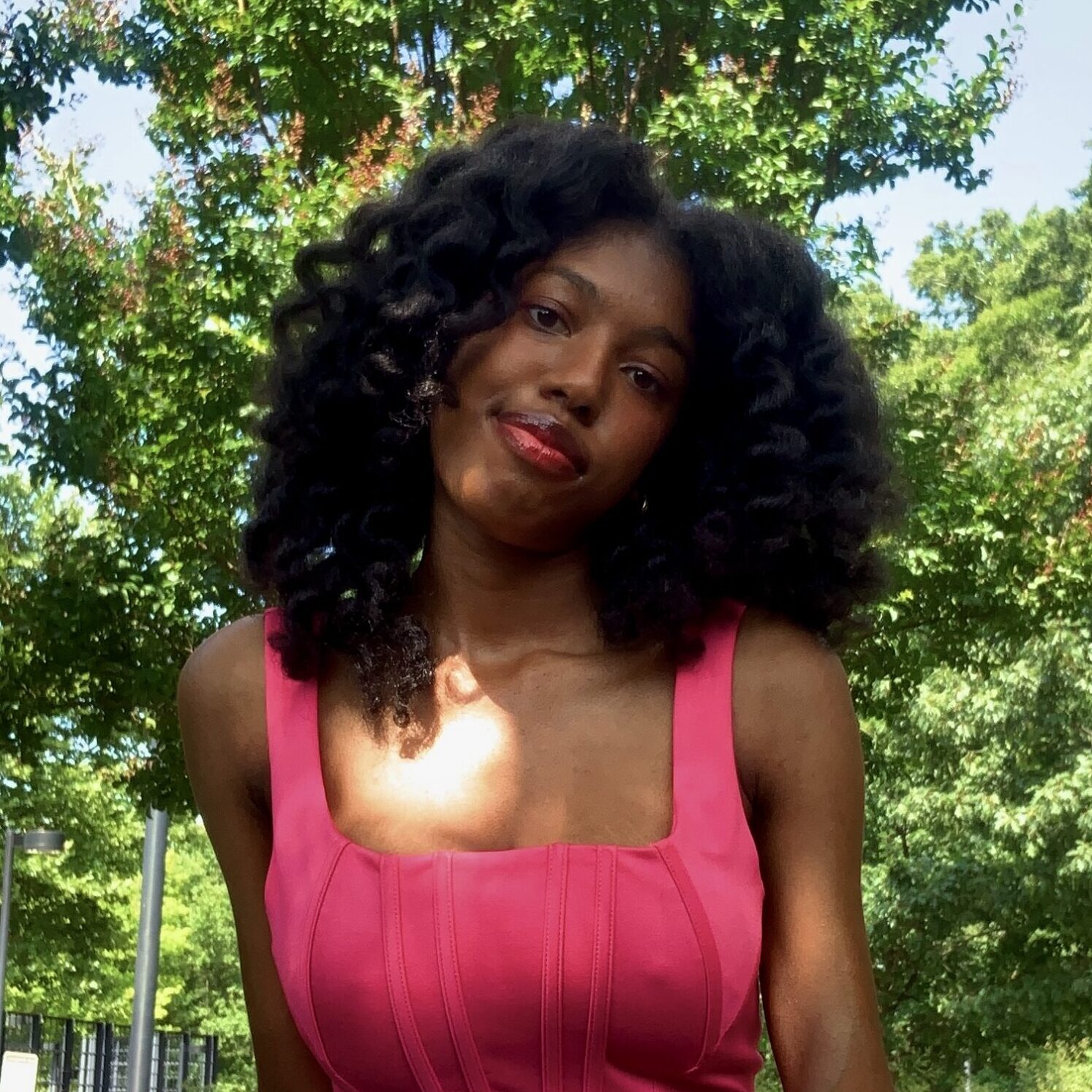
Editorial Note: Yasmine Bolden was a finalist for our Editors-in-Chief position for our 2026 Community Anthologies. We invited our finalists to write a short piece on the topic of their proposed anthology. Below, get insight into “On Refusal,” the anthology topic that Yasmine had proposed for their Community Anthology.
To this day, if you’re so inclined, you can marry the love of your life at George Washington’s Mt. Vernon estate, which sits on the very same land where hundreds of enslaved Indigenous Africans and African Americans were held in bondage. You can take an after-ceremony stroll, time-traveling to the roots of your devotion along the brown and busy Potomac while ignorant of the now incredibly polluted waterway’s long-running role as what community-engaged historian Dr. Gabrielle Tayac (Piscataway) describes as “a time-transcendent portal to ancestors, to an interrelated life source, and to ourselves.” You can even bind your lives together, promising to always run back to each other, in full view of the Ona Judge Historical Marker, a commemorative sign for an African American woman who self-emancipated by running away from enslavement on Washington’s land and evading the president’s repeated attempts to capture her.
I remember visiting the estate before the marker existed, walking through aging buildings with my siblings and mother. Feeling nauseous when I found out that people got married at a place that made me feel griefs older than anyone’s “something old” in the joints of my legs and arms. With the same heart that broke upon reading Toni Morrison, I sensed beloveds in the shade of each witness tree. My family’s faces rankled when we learned about Ona from the estate tour guides. They insisted on calling her “Oney,” since that was what the Washingtons loved to call her. I remember the way my younger sister, brilliant and sharp-tongued every day of her eight years, said she wouldn’t call Ona what the Washingtons loved to call her, because the Washingtons loved slavery. What business did she have loving what people like that loved?
I grew up on land that used to be a part of Washington’s plantation, so the visit that taught my family about Ona was far from our only trip to the formal estate grounds. During a different visit to the former plantation, my sister rocked the boat by asking a Black historical interpreter, who was playing the role of a man enslaved by the Washingtons as a part of educational programming, if he enjoyed being owned by the Washingtons. While the startled interpreter broke character to explain that the enslaved person he was representing would likely have been unable to truthfully answer her question, disgruntled white audience members got up and left. They tucked their questions about what the Washingtons liked to eat into their pockets and chased their love of a whitewashed fantasy until it led them far away from the truth.
A decade later, my sister’s lifelong refusal to love what slave masters, human traffickers, and other kinds of oppressors love remains a North Star for me.
The school system I attended as an elementary age student is now facing federal investigation for burying sexual abuse and walking back the little progress it’s made to protect Black and Brown students from bigoted policies and teachers. I am alive because my mother refused to let a school system make me believe I was as worthless as administrators’ mishandling of what I and other students experienced made me feel. I am here because of a holy litany of refusals in my grandparents’ generation too numerous to name.
I locate the shape of my family’s love in the same lifesaving asterism of refusal that has ensured the continued existence of Black, Indigenous, and Afroindigenous communities across the world.
I could write endlessly about our boycotts, resistance to removal, self-emancipation, and freeing each other. About our linguistic choices — our decisions to say Ona, not “Oney” and genocidaire, not “Founding Father” — and the related poetics work as a reflection and extension of that radical tradition of refusal. What I want to write about in this moment of thinking about the poets’ role in liberatory movements is how our refusals can and do allow us to devote ourselves more fully and sustainably to one another.
When Black and Indigenous folks refuse, what do we create space for? How are our refusals ancestral and descendant-minded? What are the grammars of refusal and where is it felt in the body? How does refusal appear in our critical fabulations and futurisms? What did we refuse yesterday and how does that river into what we will refuse tomorrow? What is shaped and loved by Lucille Clifton’s refusals to adhere to white Western poetic forms? Cameron Awkward-Rich’s invention of the anti-elegiac form? Kinsale Drake and Afaa Michael Weaver’s ways of depicting historical and interpersonal refusal as interconnected despite corporations and governments’ insistence on the opposite? Alan Pelaez Lopez’s poems refusing the “borders” of the page? We abhor the plantation wedding, but how do we love one another beyond the page so that we don’t replicate it within our literary circles and movements?
I feel the answer when I’m bridging poetry and organizing through Linked Hearts with my dear friend, collaborator, co-founder, and sweetheart Ruby Rogers. The two of us met in undergrad, studied abroad in Scotland together, and have been first eyes on each other’s literary babies, and collaborated on building a poetry organization and zine series at our university. We adored the way contributor and attendee lists became friendships, support, care, and investment in one another’s progress and stories. The zines mapped a web of Indigenous and diaspora college tricksters who cared for each other despite structural violence and censorship, pooling our shared knowledge and sharpening our understanding of who our communities were and how care could extend beyond the page and stage.
But Ruby was also the first person to name the exhaustion of weaving that kind of network as Black queer fems in an institutional setting. She spoke what my disabled body felt — our refusal and therefore the ways we loved one another could run deeper. She loved me elaborately enough to co-realize a creative space with me that sharpened our vision for what was possible, more mutual, and more sustainable for those of us who are oftentimes expected to do the most for the least while not sacrificing our devotion to hosting community offerings centering Black, Indigenous, Queer, and diasporic poetics.
Ruby loves me in a way not dissimilar to how my sister loved Ona in ways that safeguard her dignity, humanity, and magic; Linked Hearts refuses to be built upon our disenfranchisement. It has become where I go to remind myself of the truth and sharpen my refusals until love expands out from it in a way that has the capacity to change my and someone else’s material conditions.
May we continue to study the Black and Indigenous refusals that have given us life and be the refusals that keep life in others for generations to come. Where do you go to remind yourself of who you love enough to say no to everything and everyone that wants them despondent and dead? Does your pen still love what oppressors love? Does your joy? Do your hands?