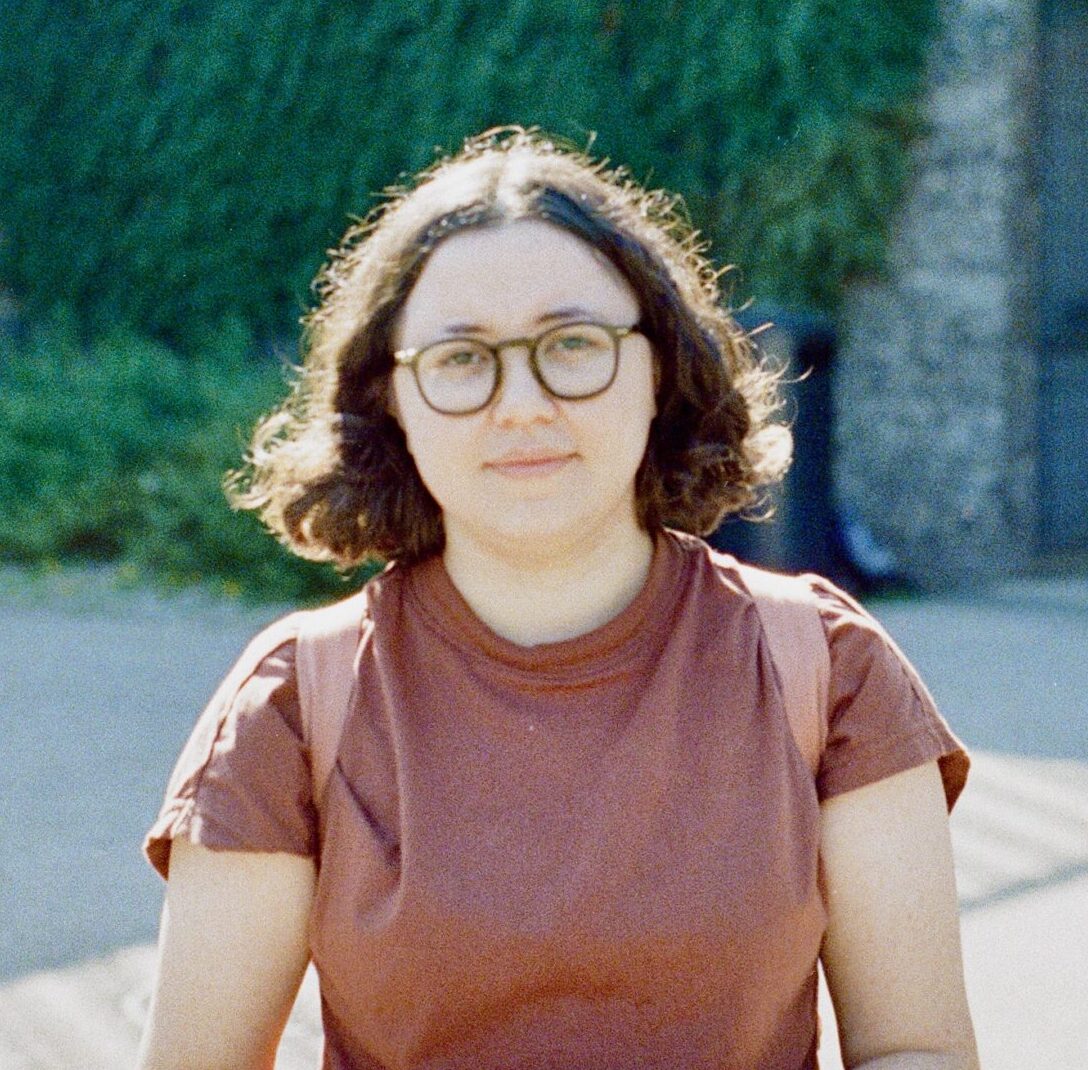
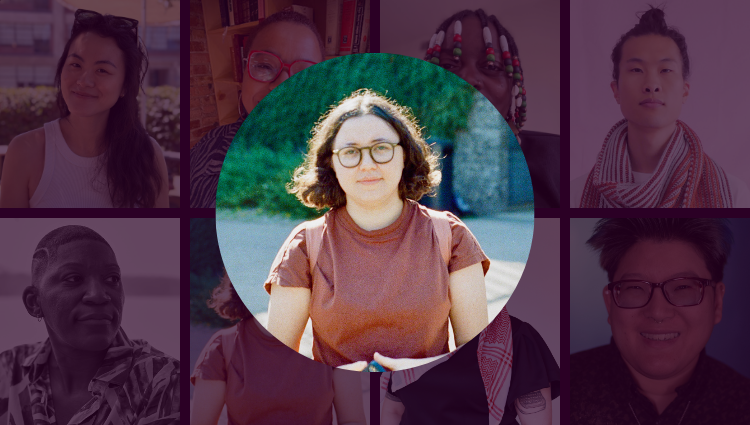
Carolina Simionato was one of our Spring 2025 Digital Residents. As a part of this program, we do Q&As with our residents to feature them, their work, and their words. See our Q&A with Carolina below, and explore more Spotlights here.
TSW: Tell us about your work, writing, or project. What are you writing these days? How is your work changing, and how is it changing you?
Carolina Simionato: I’ve been working on a novel for the past few years, about two Brazilian friends living in northern Germany and how their experiences and coping mechanisms differ and ultimately create distance between them. The novel takes up most of my writing time.
I used to write a lot of short stories when I was younger, but in the past decade or so I feel my interest has gravitated towards the novel as the right length for the kind of stories I want to tell, and how I want to tell them.
That’s changed a bit recently again. I started seeing short stories as sort of a playground for a lot of zany ideas that I don’t want to explore in book length. When writing these new stories, I allow myself to not take them too seriously, to just see where they go, to not worry about quality or result or whether they’ll ever be read by anyone. It’s part of a bigger process, too, of reminding myself of the power in trusting your own voice, and writing for yourself first.
TSW: What is a question you’re asking yourself these days, and what is a question you or your work is asking of your reader?
CS: What is really, truly important to me? I’ve been asking myself that a lot. I feel like I got caught up in other people’s ideas of writing for a while, in their ways of measuring success and satisfaction, so I’ve been looking inwards and asking myself, what is important to me? I also need to take into consideration what’s within reach, of course, and then ask myself, how do I really want to proceed?
I think my work asks many questions, but the one’s that been on my mind recently is, do you trust this voice? I sometimes feel like there’s a certain kind of (unfair) expectation when it comes to stories like my novel, and for a long time I was writing with that expectation in mind, sometimes to meet it, sometimes to rebel against it. Nowadays I feel like the best thing I can do for the novel, for myself and for eventual readers is to tell this story how it feels right to me. Whether a story meets one’s expectations or not, I hope the reader will be open to it, and willing to trust the piece’s voice. I don’t want to exotify my own culture, ethnicity and background, to feel like I have to overexplain things, be didactic. I think it ends up making the characters feel like foreigners in their own story, which is something I don’t want — even if, as is the case with my novel, immigration is a huge part of the narrative. In a way, it feels like asking the reader, do you trust me enough to come along for the ride? To allow yourself to be a close companion rather than a tourist?
TSW: What were you processing during our residency program? Did anything unlock for you? If so, what new entrance did you find for your work or for yourself as a writer in the world? And what caused that shift?
CS: During the residency, I was trying to figure out where to go with my novel, but also how to approach my writing goals beyond that. I had a great 2024 writing-wise but came into 2025 worried and anxious, which I now see was me not only moving the goalposts, but also allowing other people’s definitions of success or what a writing career looks like to seep into my work and my goals. The residency was extremely helpful in sorting through all that, and I feel I’ve moved closer to myself. The prompts made me consider a lot of things I hadn’t before, and working on them and hearing from others was an incredible experience. More than that, being in such a safe space with so many brilliant, kind people made all the difference. We were encouraged to be who we are, and we, or at least I felt accepted and appreciated for it. To be in such a group, to have that mental stimulation every week, to figure things out together in real time and grow from it was exactly what I needed. I now feel I trust myself more, and trust that there are others out there who will want to hear from me.
TSW: What’s a mantra or motto that you have in mind these days when you are writing or creating? Is there a writing routine or ritual that keeps you beginning?
CS: More than ever before, except for maybe when I was a kid, I allow myself to get to the blank page with excitement, hope, ambition, but not that much expectation or pressure. I remember that’s something I said in the program’s orientation session — that I wanted that feeling again, the playfulness, the unworried excitement. I definitely feel it, and it feels even better than it did when I was a kid, which is surprising. I sit in front of the computer and I am excited about everything that can come from it. It really helps to start a writing session with that in mind, and it’s a little different and new each time.
TSW: What motivates you to keep beginning, and/or, what is a story that gave you permission to tell yours?
CS: There are so many stories that I feel have given me permission to tell mine, but I’ll focus on Ali Smith’s Autumn, the first novel of hers that I read. Since reading it, I’ve become obsessed with her writing. Autumn is so inventive, bold, poetic, topical, but also personal, funny, honest, trippy, sometimes chaotic. There’s a lot of writing advice out there nowadays, and though I’ve learnt a lot from it, I think there can be a negative side to that as well. Reading too many voices talk about how to structure a novel, or what agents and editors supposedly want, or querying, selling your book — it can feel homogenizing and even suffocating at times. But then Ali Smith. The more I read her, the more I love it. Throughout different complex characters and stories, there her voice is, unique, a steady hand even when flowing, even in the middle of confusion. After reading, when I think about it as a writer, I realize she’s doing a lot of things I’m being told not to do, as if these are things no one will want. How silly. Then I go to the page and feel her words still reverberating inside me, and it’s easier to find the strength to write like the writer I am; to find my own path.
TSW: What is something that someone said — a fellow resident, a past mentor, perhaps something from one of the bonus sessions — that helped change the way you see your writing or work?
CS: There were so many instances of that happening during the residency, I don’t think I can mention just one. As for a past mentor, one of the first I had told me not to worry about the result of a project so much or about it being perfect and corresponding to the ideas I had about it; that whatever I did, when it’s done it’s still be imperfect, very different from what I first imagined, but also more human and interesting for it. I think about that a lot, and I deeply agree.