June 9, 2025
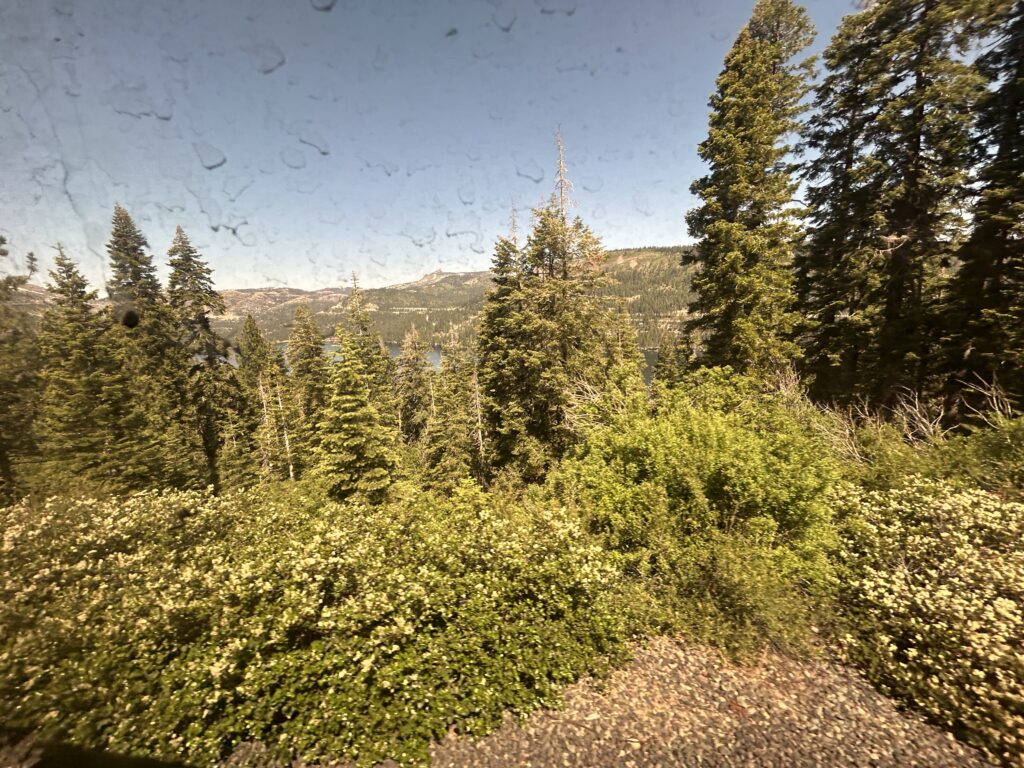
While on the 27-hour Amtrak route from Glenwood Springs, Colorado to Richmond California, I pass through dark tunnels, by desert, scarlet sandstone, snowcapped mountains, through the Sierra Nevadas.
Around midnight, ten hours into the journey, I struggle to sleep— not because the seats feel especially stiff, and the body odor begins curdling in a particularly acidic way, but because I cannot stop scrolling Bluesky and Signal in horror as the California National Guard storm Los Angeles in protest of ICE raids and mass deportations. Angelenos are out on the streets in response to the kidnappings in the Fashion District and Westlake, and the violent villainizing of immigrants. Bluesky users post that over a thousand people have shown up in downtown LA in support of David Huerta, the labor leader who was apprehended previously; the signal groups are pinging constantly, posting about where street medics and more people are needed in different parts. It has been four years since I moved from LA, where I lived from 2018-2021, and I know the streets in the pictures. My friends are sending me updates. With a pang, I miss the city.
LA was where I came to understand myself, and where I came to learn from decades of organizing and Asian diaspora history in North America. In the year before I had moved, I was confronted with a wave of rising Chinese Canadian conservatism in Ottawa, where I had grown up— hundreds of Chinese Canadians, in community with white nationalists, had shown up on Parliament Hill to support an Islamphobic protest. In a local newspaper, a white nationalist leader was quoted as saying “The Chinese community are a very good community.”
I was good at running and leaving. Doing both while contending with my own identity as an Asian Canadian and trying to understand the roots of this movement was logical to me.
I run and I run; I scroll and I scroll in the rolling darkness. My eyes turn sore with exhaustion.
Someone online posts a dispatch that Mike Davis wrote in 1992 in After the Current, in response to the ‘92 Uprisings:
“I see the uprising as having a revolutionary democratic content simply because each of these conflicts has usually been resolved around the fact that these citizenship rights cannot be minimally satisfied through the supposedly democratic institutions of this society. This has forced the struggle for elementary democratic rights to take a different form, sometimes an insurrectionary form; certainly this was true in Los Angeles and all the actions from Las Vegas to Toronto in solidarity with events in LA. The struggles for those minimal rights have to flow back into the streets.”
The train creaks along on railroad tracks first blasted and laid down by over 12,000 Chinese laborers over a century ago. They were paid 30% less than white workers, and likely over one thousand laborers died. After construction finished on the railroad, a suite of laws restricted Chinese immigration and violence plagued them for years. In 1871 Los Angeles, eighteen Chinese men were hanged in an event now known as the Chinese Massacre, years after rising anti-Chinese tensions— local newspapers had started running editorials calling Chinese people inferior and immoral, and decrying Chinese immigration. Soon thereafter, the 1875 Page Law restricted Chinese women and prevented families from being formed, and the Chinese Exclusion Act of 1882 banned Chinese immigration outright.
It’s hard to witness the state terror in LA and not see the echoes of the anti-Chinese riots and massacres that happened over one hundred years ago. Kelly Lytle Hernandez wrote about how much of the modern border patrol has foundations in how they treated and racialized Chinese laborers around the turn of the 20th century. Our fights are connected.
Into the early hours of the morning, the bright glow of the skeets and the posts in the LA Mutual Aid Updates keeps me awake. I think of 2020, the uprisings, the pandemic, the fires, the ways in which I witness the city band together, create networks, come together in the most breathless of ways.
I think of my ex, A. When I caught up with him a few months ago in Koreatown, amidst his organizing and mutual aid work in Echo Park, he told me his first date with his current love was in the same week the Eaton fires blazed into being. I laughed, thinking of how our brief, intense relationship bloomed back to life in the first few weeks of the pandemic.
There’s something about crisis, I teased.But there is something about crisis— something about an opportunity to show love in the purest, most powerful way possible. Love for our neighbors, love for our communities. In those years I lived in LA, I experienced the most profound forms of care, the most intense sorts of connections, all burning bright in the darkness.
July 13, 2024
After three successive, exhausting moves in San Francisco’s Mission neighborhood, my friend M chooses to quit her job in affordable housing and return home to East LA.
I’m so tired, August, she says to me over the phone. Her voice is so weary.
She can’t drive, so I offer to chauffeur her and her things back to LA in a UHaul. At 6am, I take the BART into her place in San Francisco, thinking about my move from LA to San Francisco almost three years previous. I text my girlfriend about how I remembered driving over the Bay Bridge at 11pm for the first time, its lights all aglow, and the smell of saltwater hitting my nostrils for the first time. How, when A and I looked at each other while crossing the bridge for the first time, the glow of lights lining the Bay Bridge shone stars in our eyes.
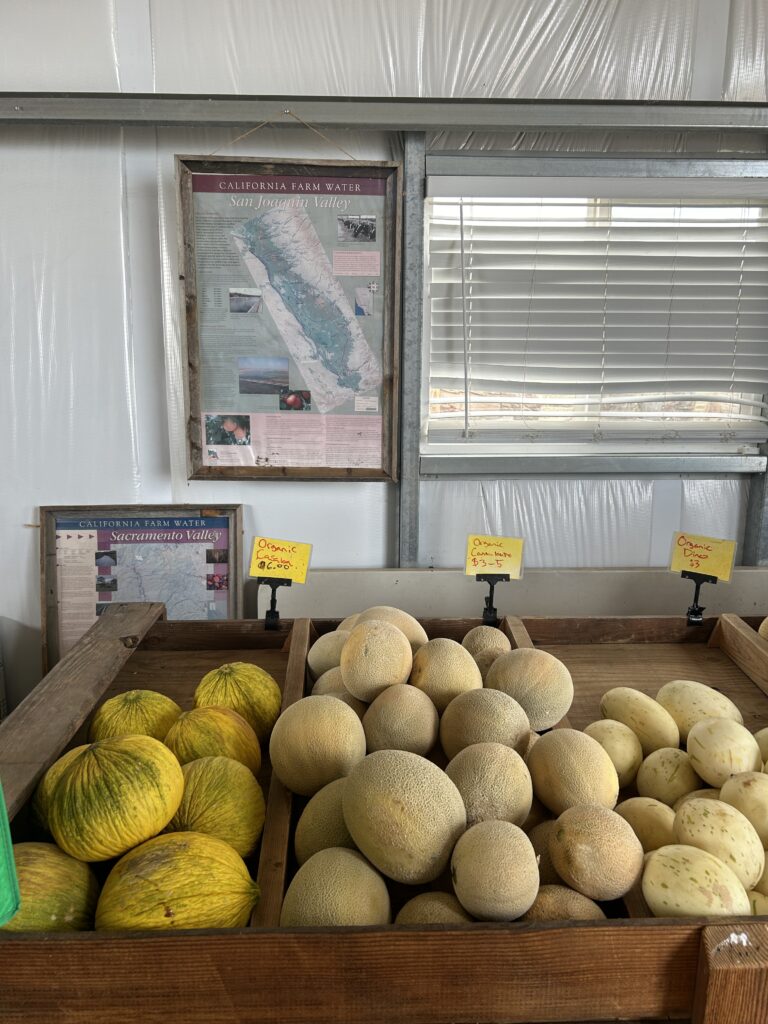
M and I take the long way to LA, stopping by a small farm in the Central Valley, where the heat stands still when we step out of the car, closing in around us. Still, we inspect sweet melons, honey, and dried fruit laid out in a large barn and buy some for the road, sticky juices sliding down our chins, trees stretching above us.
March 13, 2022
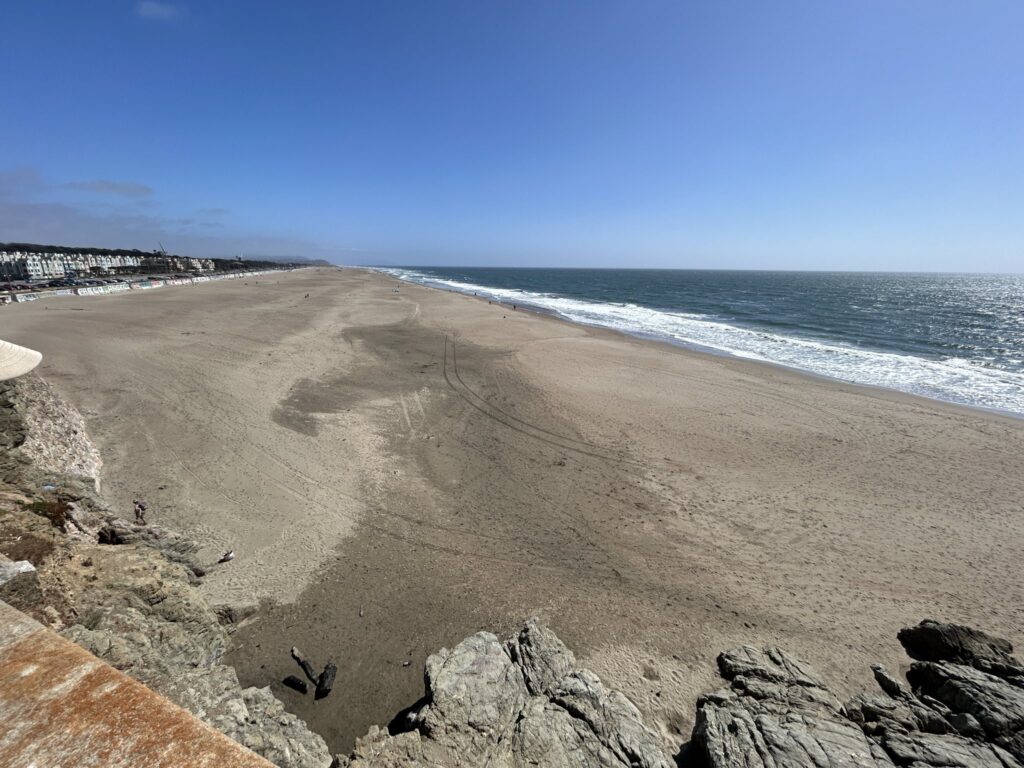
The summer I moved to San Francisco, A came with me to scout for apartments. We went to Ocean Beach, where the waves crashed and the wind blew through us. He shivered, pulling his hoodie tighter over his head.
We gazed at the sign that read “Hazardous Surf: Rip Currents.”
There’s no such thing as an unsexy beach, A said, after a long contemplation of the shoreline, But this is the least sexiest beach I’ve ever seen.
A was born and raised in Miami; I grew up in Eastern Ontario, in freezing dark cold. Often, I felt full to bursting with a winter that I could not shake, feeling that every time my mouth opened, icy meltwater would gush forward, unabated. He was from the complete opposite climate spectrum, craving the heat, loving the sun, shivering whenever the temperature dipped too cool to wear shorts.
The breakup happens slowly at first– just two people moving away from each other– then fast, all at once, when I end a call with words that have been weighing heavy on me for the past year.
After the call, lying dazed on my sofa with dried tears crusting my eyes, I reason that we are just too different—that we can not run away from our upbringings, despite the kinship in the distance we had crossed to be in Los Angeles, from opposite ends of the continent.
I had moved to LA craving a radical, political East Asian community, looking for support and elders to fight a burgeoning conservative Chinese Canadian movement—but also equally desperate to be away from the dark despair of Eastern Ontario winters. He had moved from Miami, from one ocean to the other, looking to build a skillset to support migrants forced over the border by climate change and American imperialism, and to fight the rising tide swallowing his city whole.
Both of us were just too tied to where we came from, our roots entwined deeply in the soils of where we were raised.
Eyes swollen with dried tears, I go to work and reveal what has happened. A community collaborator tutters sympathetically.
Our life paths are circular, she tells me, Sometimes they arc away from others, never to touch again. But sometimes–they meet and intersect once more.
March 20, 2020
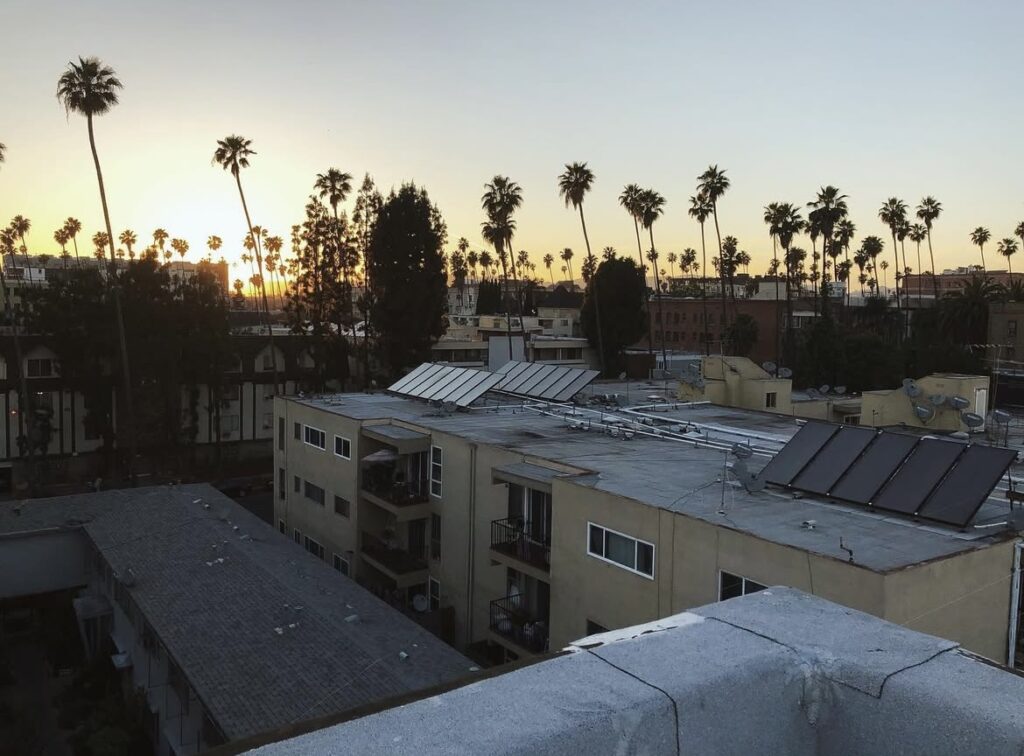
In the first few chaotic days of lockdown, A and I make our way back to each other, fresh off a breakup in February. The world stretches into the darkness of the unknown: we hold each other, make space for each other among the many moments of fear and uncertainty. In the darkness, we find each other again.
In the next few months, we would choke on acrid wildfire air together as the Bobcat Fire approaches. I would wait to comfort him at home after he joins the uprisings for Black lives. He would kiss me on the forehead as I returned from blockades and protests at landlord’s homes. We would contract COVID-19 in that first pandemic December, before there were any vaccines, snuggling close after chugging Rompe Pecho and watching Great British Bake-Off.
But in those first few days, on that first day of reconnection, I lie on the floor of my studio, trying to slow my breathing with him on the other end as I search for something to hold onto, asking what it was like, living through hurricanes and natural disasters. We batten down the hatches, and wait it out with friends and loved ones, he says, It will pass.
November 20, 2020
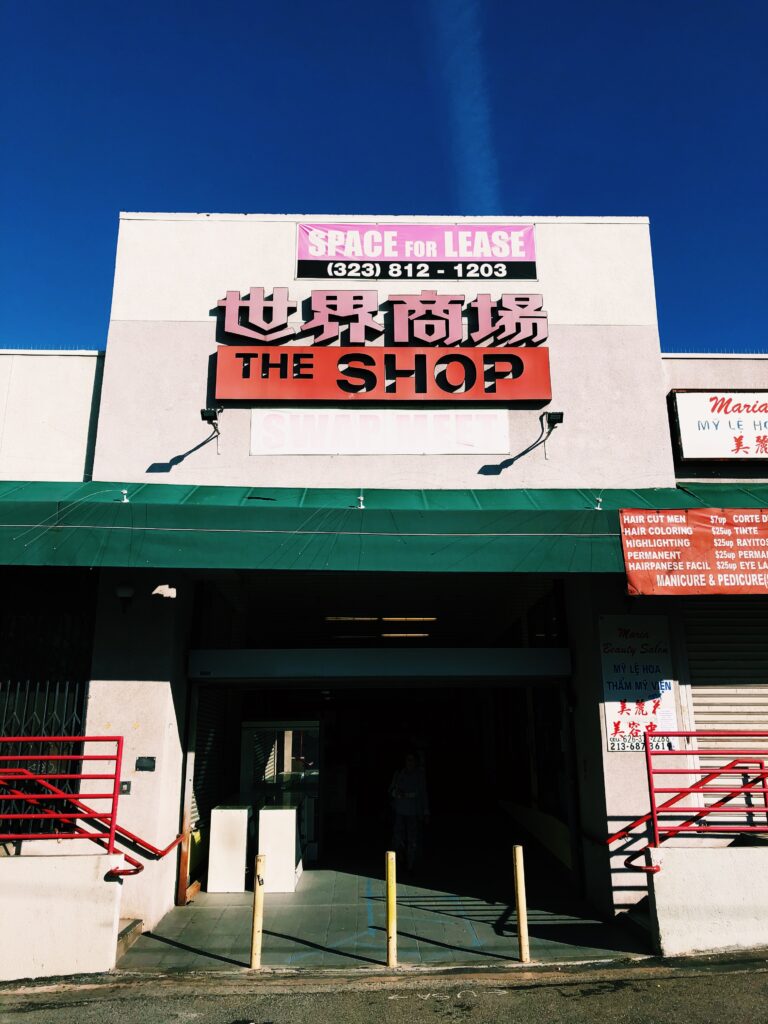
At intersections in my Koreatown neighborhood, I notice signs posted on the tall lightpoles on the empty residential streets as I go to drop Know Your Rights flyers to businesses in Chinatown. Despite the pandemic suffusing the air, the displacement pressures continue and just months previous, just a week before the COVID-19 pandemic lockdown in March, comrades and I had discovered that the working class vendors in a Chinatown strip mall were being evicted by a wealthy commercial developer.
We had wandered the rows of the mall with questions and information on community organizing, with warnings from a community elder of a new, highly contagious disease ringing in our ear
In the streets north of Wilshire, where A lives, posters of an older Korean American woman are pasted on the poles. She stares blankly into the camera and they read:
MISSING
She has Alzheimers.
She went missing around 6th Street and Vermont.
She was wearing a red sweater.
In the streets closer to my home, in Little Oaxaca, one single poster with an older woman, smiling wanly at the camera, is taped outside of the grocery store that my small studio apartment is attached to. It reads:
FUNERAL FUNDRAISER
Tamales for Sale.
$2 for one.
I Miss You, Mom.
May 29, 2022
In “There are Trees in the Future, Or, A Case for Staying”, by Lupita Limon Corrales, she describes organizing, mutual aid, solidarity in the immediate wake of the lockdown in COVID-19. She opens with a quote from Grace Lee Boggs that leaves me breathless: “How can you understand change when you’re always on the move? The most radical thing I ever did was stay put.”
It feels tender and raw to think about staying: I had spent so much of my young life moving between houses, apartments, cities and neighborhoods. I yearned for rootedness but felt a familiar itchiness when I stayed somewhere longer than two years. It had been almost a year since I had moved to San Francisco and I am newly separated from A, who had stayed in LA. I feel my ties to the city being severed, bit by bit.
I return to the city for a friend’s birthday, feeling soft and sore. At the party, held at a community farm in Pomona, amidst a field filled with corn and vegetables and fruit, I meet an organizer who dazzles me with tales of the restoration work he has been doing in the hills overlooking Lincoln Heights, where he had grown up.
Come with me, he says, and I go with him the next morning. We drive up to a small hill, and sit on scratchy yellow grass, cut to mere centimeters (cut short by the workers, he told me, who didn’t have the training to know what they were doing—not their fault). Mount Washington sways green in the distance.
Limon Corrales writes about Daniel, a community elder who had worked for sixteen years, putting love and labor into a local garden. She describes how he was in the process of being forced out by the garden council for “using too much water and refusing to track his hours or his production numbers”, despite the fact that he has added over $100,000 of unpaid labor to the garden.
We painstakingly fill gallon water bottles, drill holes into the caps, tilt them downwards into the soil to let the water sink deep to the roots of the native California plants lovingly situated in the dirt: matilija poppy, coast live oak, white sage, artemisia, buckwheat. He points them out to me as we work, and I am grateful for the naming. They are still small spindles, hard for me, uneducated, to name. I think of the clumps of yarrow that grow in the marshes and the forests where I grew up, ache suddenly for a possibility where I return to where I was raised.
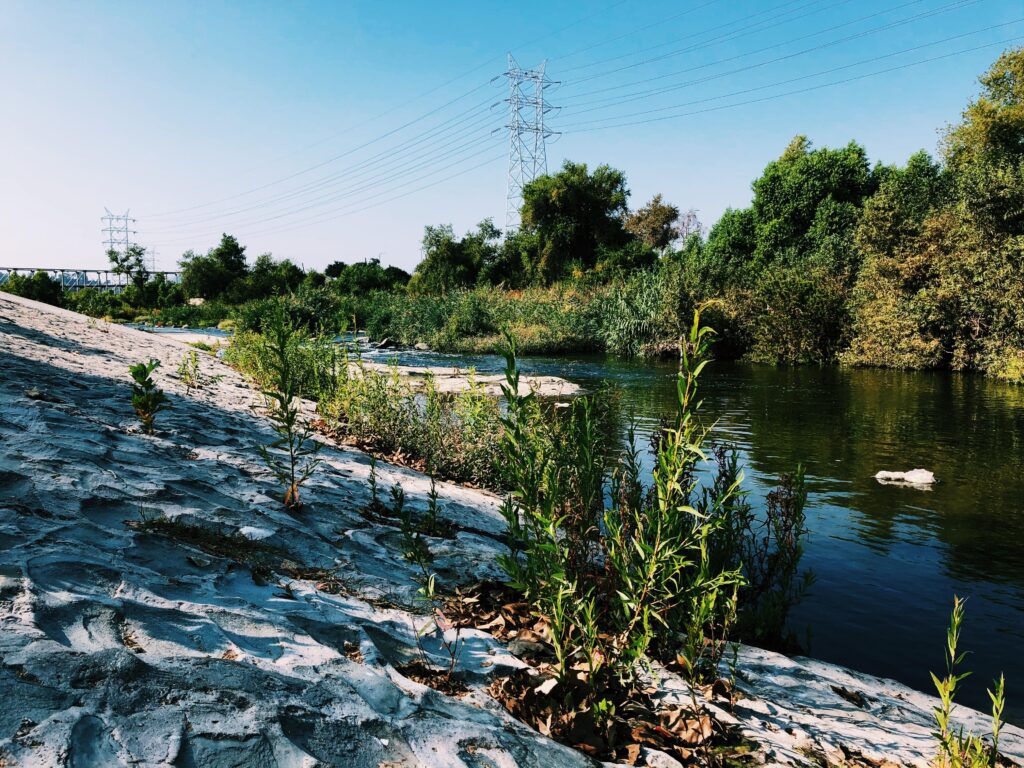
After he wraps the hose and we say goodbye in Spanish to the neighbor who had grinned hello at us, we go to the LA River, where the reeds stretched high over us and I could feel the water in the air, cool on my skin, heavy in my mouth.
January 20, 2025
As the fires burn and tear through Los Angeles, a community comrade CJ and I decide to gather mutual aid items and make our way down south. They had already been planning to drive south of the Bay Area to drop some things off at their parents’ house.
I feel ill, watching the flames burn higher and higher, the loved ones organizing and plotting how to get valuable materials and supplies to vulnerable aunties and uncles in buildings without proper ventilation, unhoused comrades.
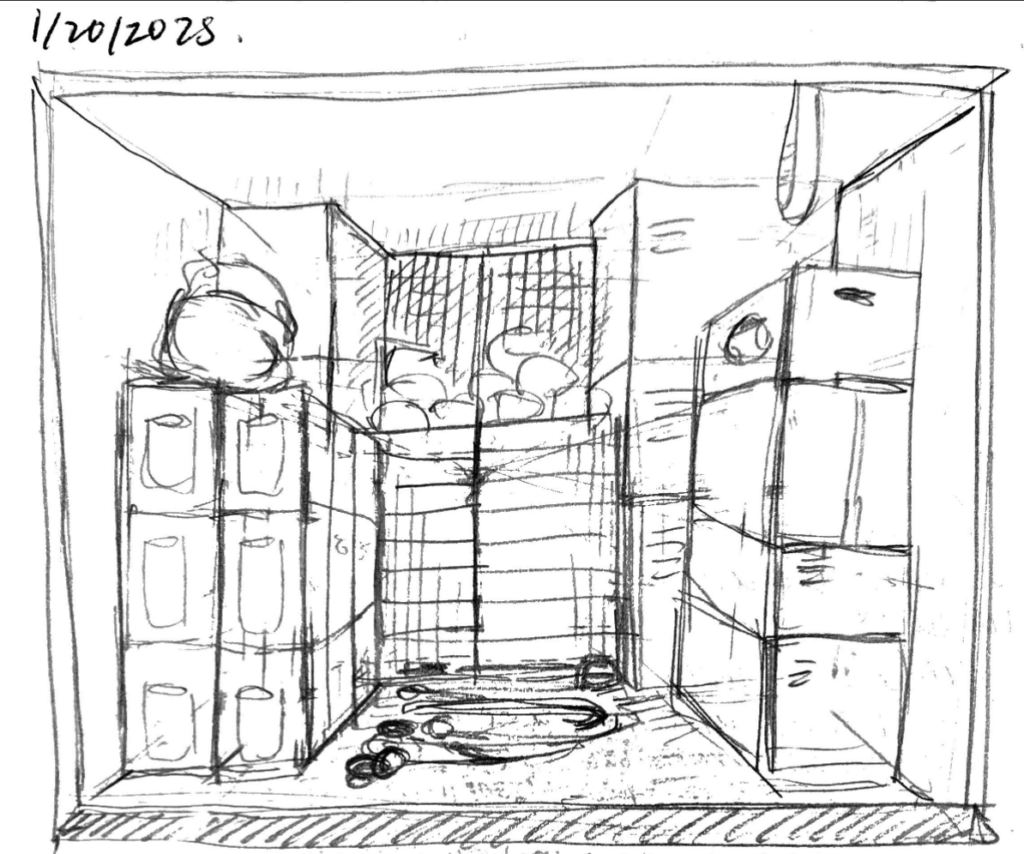
CJ and I reach out to our disability and mutual aid networks, checking in and touching base with our friends who we had been connecting with for Palestine actions and supplies to keep us safe from COVID-19. Between us, we gather enough materials to fill a small U-Haul van, including over 2000 diapers, 28 purifiers, 1000 N95s, and 1000 tampons.
I take notes that eventually turn into a comic published in a zine themed Tender in the Flames.
“The fires laid bare how the state and capitalism has failed so many– particularly low-income, Black & brown, POC Angelenos,” I write, “The Eaton and Palisades fires have unleashed enormous amounts of toxins in the air. Rents are being hiked by greedy landlords. Unhoused people continue to be exposed to the elements. Climate change and unabashed development that has invited invasive, flammable plants.”
After our eight hour drive down to Los Angeles from Oakland, we spend just one day in Los Angeles, driving all over the city with supplies, stopping at various locations. CJ and I drive by a burned out house, and are also moved by the organizing, by our connections to each other. CJ’s artist connection (our first stop) is partnered to someone an organizer friend had crushed on, many years ago. We run into a land trust organizer I’ve worked with over the past few years, and I shout to him, joyfully. We give air purifiers to a man in Altadena, who had set up a small noticeboard with information for his neighbors on his fence.
I’ll give them out to my older neighbors, he says, We have to look out for each other.