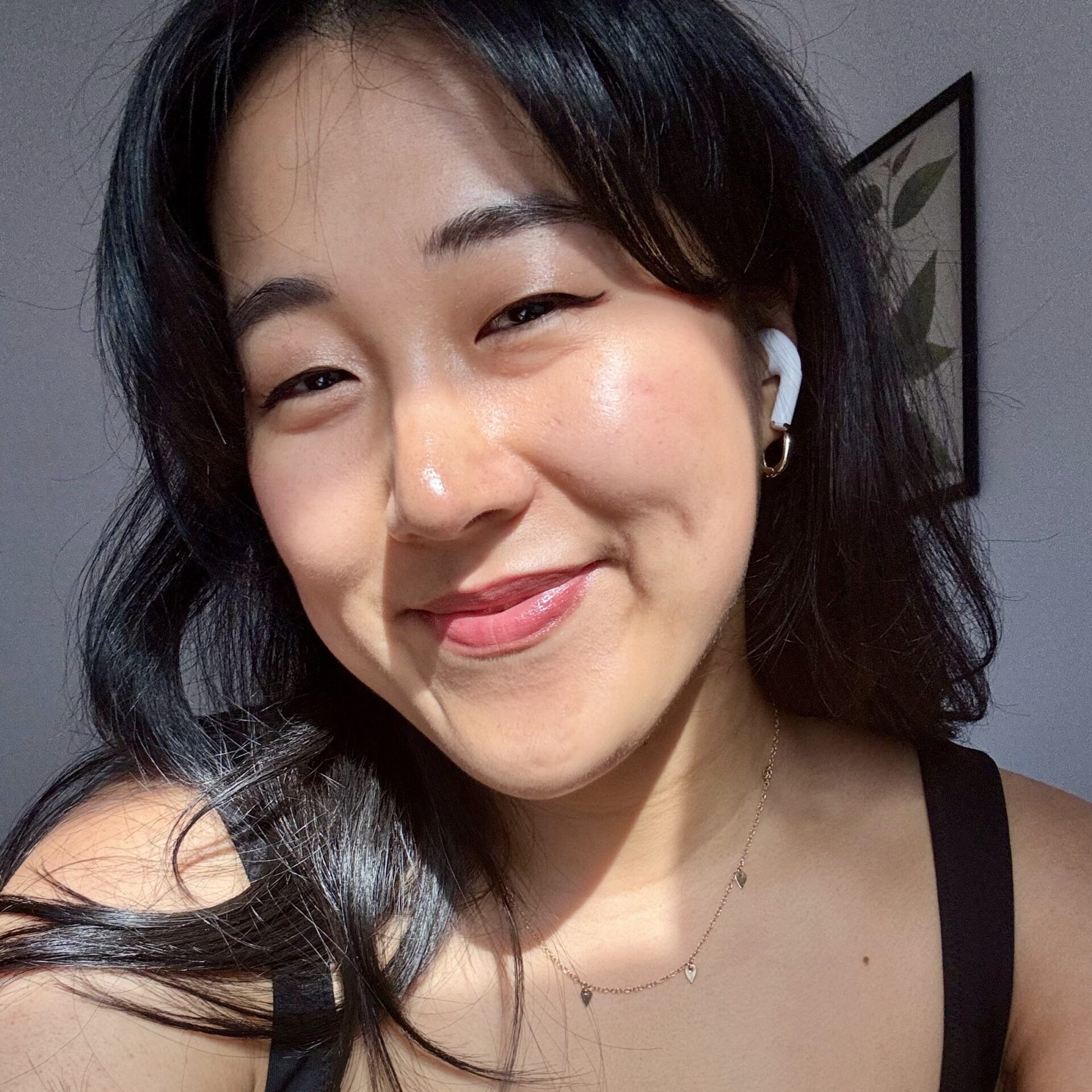

Cissy Chen was one of our Fall 2025 Digital Residents. As a part of this program, we do Q&As with our residents to feature them, their work, and their words. See our Q&A with Cissy below, and explore more Spotlights here.
TSW: Tell us about your work, writing, or project. What are you writing these days? How is your work changing, and how is it changing you?
Cissy Chen: I have been writing poems about subversive rage that blend mythology and nature, derived from dream journals that I’ve been keeping over the last year. Lately I’ve been interested in mythology because of the authority its stories command. The language of myth makes acts — of rage, survival, even violence — feel sacred, inevitable, larger-than-god. Myths are also often told in verse, or verse-like language that add to its memorability and repeatability, so it can be spread for generations to come. I’ve been using mythical language and style to position the Asian woman experience of victimhood and rage, in hopes of bringing it the cosmic legitimacy that it is often denied.
TSW: What is a question you’re asking yourself these days, and what is a question you or your work is asking of your reader?
CC: My work has been exploring what the right way to express anger is — one that is fair to both the subject and object of that anger. It asks — what is the line between victimhood and villainhood?
In terms of my process, I’ve been asking myself whether to write in the height of an experience (painful or otherwise), or how long after it. I am curious what level of emotional and temporal distance is useful for every stage of the writing process, and how that’s affected by the purpose of my work — to shock? to remember? to spark action? I am interested in what wisdom lies in sinking into the body-feelings of an emotion, and conversely, what wisdom lies in conceptualizing and metaphorizing the feeling after it passes in the body. I use both in my poetry, but have been trying to wield them more intentionally.
TSW: What were you processing during our residency program? Did anything unlock for you? If so, what new entrance did you find for your work or for yourself as a writer in the world? And what caused that shift?
CC: I was trying to process why I write, and why it felt like I kept writing the same poem multiple times. The residency helped me find new ways to ask this question. I found a narrative around my purpose and my current work — starting with our very first session on the Artist Manifesto. I write to shock, unmoor , discomfort. I want to say what is hard to confront. I want to juxtapose things that make people feel so uncomfortable that it cracks them open to insight. I want to quietly disrupt and disturb. I want to use my underestimated identity of being an Asian woman to wiggle my way into near-complacency before I strike when it’s least expected. I want to subvert my stereotypes. I want to own them too. I want people to feel the intensity of the contradiction — and ultimately, I want us to connect through the discomfort.
TSW: What’s a mantra or motto that you have in mind these days when you are writing or creating? Is there a writing routine or ritual that keeps you beginning?
CC: Writing requires presence — not just when fingers are on keyboard or pen on paper, but also in the living in between. Three parts of my writing practice are 1) meditation, 2) reading and consuming art and 3) deep conversations with friends. Meditation and other similar activities help me cultivate deeper presence and observation, a muscle that I believe is essential for my writing practice. Writing is noticing — of the smallest, most specific details that, when investigated with care, carry within them deep insight. The more I take in the world, the more I will feel inspired to write. Reading and consuming art helps shake up my snow globe if I’m stuck and they give me permission to try new things. Lastly, much of my inspiration comes from long conversations with friends that weave in and out of sharing ourselves, observing and analyzing the world together , and creating abstract concepts from our life experiences. These conversations are my lifeblood and collaborative creations of their own.
TSW: What is something that someone said — a fellow resident, a past mentor, perhaps something from one of the bonus sessions — that helped change the way you see your writing or work?
CC: “Get hungry and pursue that hunger however you want.” I love seeing writing as a pursuit of obsession, writing deeper and deeper into obsessions until I find a way out, a way to new insight. At some point, I was frustrated that it seemed I was trying to write the same poem multiple times, like I kept circling back to something. But after giving myself permission to lean into that obsession, I felt much more excited about the work I was producing.