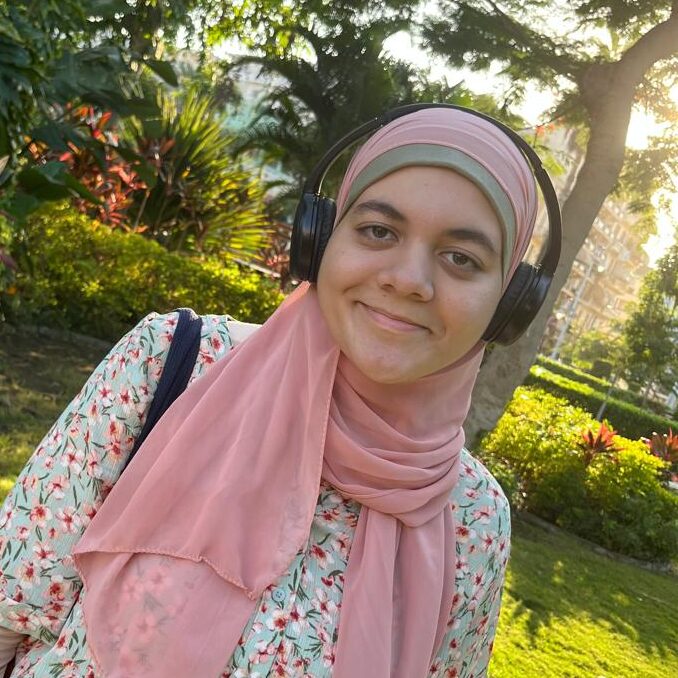

Passant Eltarek was one of our Fall 2025 Digital Residents. As a part of this program, we do Q&As with our residents to feature them, their work, and their words. See our Q&A with Passant below, and explore more Spotlights here.
TSW: What is a question you’re asking yourself these days, and what is a question you or your work is asking of your reader?
Passant Eltarek: A question I’ve been asking myself in recent years, and that my work is definitely now asking of my reader, is about the extent to which we are willing to privatize vs publicize different emotions, particularly love and grief. There’s a general consensus among humans that grief is a form of love persevering; yet, we seem so much more willing to share our grief with fellow grievers of the same people than share our love with fellow lovers of the same people. We’re territorial about loving someone but so open about grieving. We celebrate our love behind closed doors yet express our grief by reaching out to one another in communities and networks. In my work, I’m looking to explore the social constructs, the psychological mechanisms and the emotional complexities that lead to this rather peculiar arrangement.
TSW: What motivates you to keep beginning, and/or, what is a story that gave you permission to tell yours?
PE: There’s a Turkish myth about a madman that spends his days collecting the sun using a sieve in order to bring light into the grave of his dead wife who had gone blind. When asked why he wouldn’t just create a hole in the ceiling of his cave so that the sun would reach her naturally, he says that he doesn’t want the world to enter along with the sun, he wants to purify the sun first. Of course, everyone else agrees it’s futile, and regards him as the madman of the town. What speaks to me the most about this story is how active it portrays grief to be, how active the desire to continue loving those who are no longer there even when it’s technically futile. I’m drawn to how it sheds light on the social construction of it all: love, grief, madness, and futility itself. To a great extent, my current writing project centers a number of characters who are, in very different ways, desperate to put their love/grief into practice. I feel like this myth gives me permission to explore those themes in my own work on a deeper level.
TSW: What is something that someone said — a fellow resident, a past mentor, perhaps something from one of the bonus sessions — that helped change the way you see your writing or work?
PE: Something I heard that always stuck with me is that we get stuck in our writing projects at the same points we get stuck in our lives (around the 25% and 50% marks). As I’ve stated at the beginning of the residency, my main aspiration for the residency was to work through my quarter-novel-crisis, which I have successfully achieved and walked away from the residency with so much more than that — a flow of inspiration and a community of incredible writers and humans.