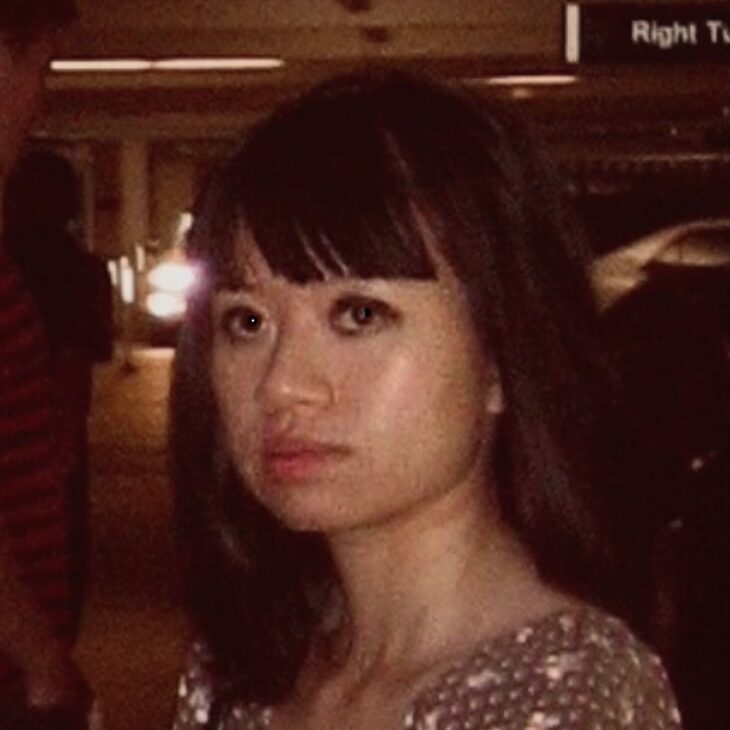

Ha Kiet Chau was one of our Fall 2025 Digital Residents. As a part of this program, we do Q&As with our residents to feature them, their work, and their words. See our Q&A with Ha Kiet below, and explore more Spotlights here.
TSW: Who do you bring into the room with you when you write, and/or, who do you consider your work to be in conversation with? Who are you writing for?
Ha Kiet Chau: When I am deeply immersed in my writing — my past, present, and future selves enter the room. I’ve been crafting poems in first person that explore the mind, the body, and all the unhealed parts of myself that are afraid to be seen, but do not want to be invisible. Often, I am in conversation with my ten-year-old self, the little girl who lacked self-esteem, who did not fit in, who did not belong. Writing about childhood has always been therapeutic and freeing. I realize that when I start healing the wounds of the inner child, my present and future selves also heal.
As I write, I would examine these questions: who am I, where did I come from, what am I afraid of, how do I begin again? My work revolves around themes such as identity, trauma, belonging, and the search for home. Most of the time, I am writing to understand myself better, and at the same time reaching out to anyone who has experienced struggle and loss, who has felt alone and unseen, and who needs inspiration at a time of great uncertainty and turbulence in the world.
TSW: What were you processing during our residency program? Did anything unlock for you? If so, what new entrance did you find for your work or for yourself as a writer in the world? And what caused that shift?
HKC: During this residency, I was processing different topics such as form and archives, holding spaces and world building, and relating them to my own writing practice. Engaging in group conversations, and contributing thoughts and ideas helped me step out of my shyness. The encouraging feedback from my facilitators and cohorts lifted my confidence as I reminded myself to be brave and to share my work with an audience.
During the celebratory reading, I was intrigued by the concept of sound poetry while listening to one of my cohorts sing their poem aloud with so much depth and vulnerability — it was truly beautiful to witness. The rhythm of a musical instrument, whether it be a violin, guitar, or drum accompanying the human voice is powerful. After the residency, I have been thinking a lot about ways poetry can captivate and come alive. I am fascinated with pushing language beyond the page, and in the future, I would like to organize and participate in readings that incorporate sounds, images, and interactive elements to move the audience visually and emotionally, similar to listening to a song or watching a film.
TSW: What motivates you to keep beginning, and/or, what is a story that gave you permission to tell yours?
HKC: These past few years have been challenging after my house caught on fire due to illegal fireworks in the neighborhood. During reconstruction, I lived in a tiny backyard shed while taking care of my elderly parents. They lost their home and belongings during the Vietnam War, and resided in refugee camps in Hong Kong and the Philippines before resettling in the United States. My mother is blind from war fumes and my father passed away from cancer in spring 2024. Their journey of struggle and survival motivates me to keep beginning. Their lives and experiences have taught me a lot about strength and resilience, to keep going and not give up despite challenges and obstacles.
After the fire, moving from place to place, I gravitated towards the idea of narratives shifting—“within ourselves, between each other, and beyond our bodies.” The fire has been a catalyst, pushing me out of reclusion, and into a transformative journey of self-discovery and soul growth as I experience this profound awakening, my world falling apart in order for me to rebuild, begin anew—from my house burning down, to living in a shed for two years, to coping with the grief of my father’s passing, to ultimately deciding to return to graduate school, and stepping back out into the world, bold and fearless. I can’t predict what will happen tomorrow or the next five years, but I want to keep shifting and evolving as I continue to write and learn and explore who I am, who I can be, and where I belong in this world.
Some books on my shelf:
A Thousand Times You Lose Your Treasure by Hoa Nguyen
Postcolonial Love Poem by Natalie Diaz
Burying the Mountain by Shangyang Fang
The Best We Could Do by Thi Bui


